Frontend vs Backend Development Explained

Web development is one of the most popular and rapidly growing fields in the technology industry. When people talk about building websites or web applications, the work is usually divided into two main areas: frontend development and backend development.
Both frontend and backend development are essential for creating modern websites. While frontend development focuses on the user interface and the visual experience of a website, backend development handles the server, database, and application logic that power the system behind the scenes.
If you have ever visited a website, clicked a button, filled out a form, or logged into an account, you have interacted with both frontend and backend technologies. The frontend makes the website look attractive and interactive, while the backend processes data and ensures everything works correctly.
For beginners entering the world of web development, understanding the difference between frontend and backend development is an important first step. Each area requires different skills, tools, and technologies, but both must work together to build functional web applications.
In this guide, we will explore what frontend development is, what backend development is, how they differ, and how they work together to create modern web applications.
Frontend development refers to the part of a website or web application that users see and interact with directly in their browser. It focuses on creating the visual layout, user interface, and interactive elements of a website.
Frontend developers are responsible for designing and implementing elements such as navigation menus, buttons, forms, animations, and page layouts. Their goal is to ensure that websites are visually appealing, responsive, and easy to use.
Frontend development mainly uses three core technologies:
HTML
CSS
JavaScript
HTML is used to structure the content of a webpage. CSS is used to style and design the layout. JavaScript adds interactivity and dynamic behavior to the page.
Modern frontend development also involves frameworks and libraries that make development more efficient and scalable.
Some popular frontend tools include:
React
Vue.js
Angular
Tailwind CSS
Bootstrap
Frontend developers must also consider factors such as responsiveness, accessibility, and performance to ensure that websites work smoothly across different devices and browsers.
<!DOCTYPE html>
<html>
<head>
<title>Frontend Example</title>
</head>

<body>

<h1>Welcome to My Website</h1>
<button onclick="showMessage()">Click Me</button>

<script>
function showMessage() {
    alert("Hello from the frontend!");
}
</script>

</body>
</html>
This example shows how HTML, JavaScript, and the browser work together to create an interactive user interface.
Backend development refers to the server-side part of a web application. It is responsible for processing requests, managing data, and performing the logic that powers the application.
Unlike frontend development, backend code does not run in the user's browser. Instead, it runs on a server.
Backend developers build systems that handle tasks such as:
Processing user requests
Storing and retrieving data from databases
Managing authentication and authorization
Performing business logic
Communicating with APIs
Backend development uses server-side programming languages and frameworks.
Some popular backend languages include:
PHP
JavaScript (Node.js)
Python
Java
Ruby
Backend developers also work with databases such as:
MySQL
PostgreSQL
MongoDB
Frameworks like Laravel, Django, Express, and Spring help developers build backend systems more efficiently.
Route::get('/users', function () {

    $users = [
        ['name' => 'Alice'],
        ['name' => 'Bob']
    ];

    return response()->json($users);
});
In this example, the backend processes a request and returns data in JSON format.
Frontend and backend development are two parts of the same system. They must work together to create a complete web application.
When a user interacts with a website, the frontend sends a request to the backend server. The backend processes the request, performs any necessary operations, and sends a response back to the frontend.
For example, when a user logs into a website:
The frontend displays the login form.
The user enters their credentials.
The frontend sends the data to the backend.
The backend verifies the credentials.
The backend returns a response indicating success or failure.
The frontend updates the interface accordingly.
This communication typically happens through HTTP requests and APIs.
fetch('/api/users')
  .then(response => response.json())
  .then(data => {
      console.log(data);
  });
In this example, the frontend requests data from the backend API.
Although frontend and backend developers often collaborate closely, their roles and responsibilities are quite different.
Frontend development focuses primarily on user experience and visual design. Developers in this field must understand layout design, browser behavior, and responsive design.
Backend development focuses on system architecture, data management, and server performance. Backend developers must understand databases, server logic, and security practices.
Another key difference is where the code runs. Frontend code runs in the user's browser, while backend code runs on a remote server.
Despite these differences, both areas require strong programming skills and an understanding of how web technologies interact.
Some developers choose to learn both frontend and backend development. These developers are known as full stack developers.
Full stack developers have the ability to build complete web applications from start to finish. They understand how to design user interfaces as well as how to build the server-side logic that powers the application.
Because full stack developers can work on both parts of a project, they are often highly valued in development teams and startups.
However, mastering both frontend and backend development requires learning many technologies and tools.
For beginners, choosing between frontend and backend development often depends on personal interest.
If you enjoy designing interfaces, creating animations, and building interactive user experiences, frontend development may be a good fit.
If you prefer working with logic, data processing, and system architecture, backend development might be more appealing.
Many developers start with one area and later expand their skills to include the other.
Regardless of which path you choose, understanding how both frontend and backend systems interact will make you a stronger developer.
Even if a developer specializes in one area, having basic knowledge of both frontend and backend development is extremely valuable.
Frontend developers benefit from understanding how APIs and servers work, while backend developers benefit from knowing how frontend interfaces interact with their systems.
This shared understanding improves communication between team members and leads to better-designed applications.
Modern web development often requires collaboration between frontend and backend teams, making cross-disciplinary knowledge highly beneficial.
Frontend and backend development are two fundamental components of modern web applications. Frontend development focuses on creating the user interface and interactive experience, while backend development handles the server-side logic, data management, and system functionality.
Both roles are essential, and neither can function effectively without the other. Together, they form the foundation of every website and web application you use today.
For beginners entering the world of web development, understanding the difference between frontend and backend development provides valuable insight into how the web works.
As you continue learning, you may choose to specialize in one area or develop the skills needed to become a full stack developer capable of building complete applications.
 Mar 07, 2026
Learn what a REST API is in web development and how it enables communication bet...
 Mar 06, 2026
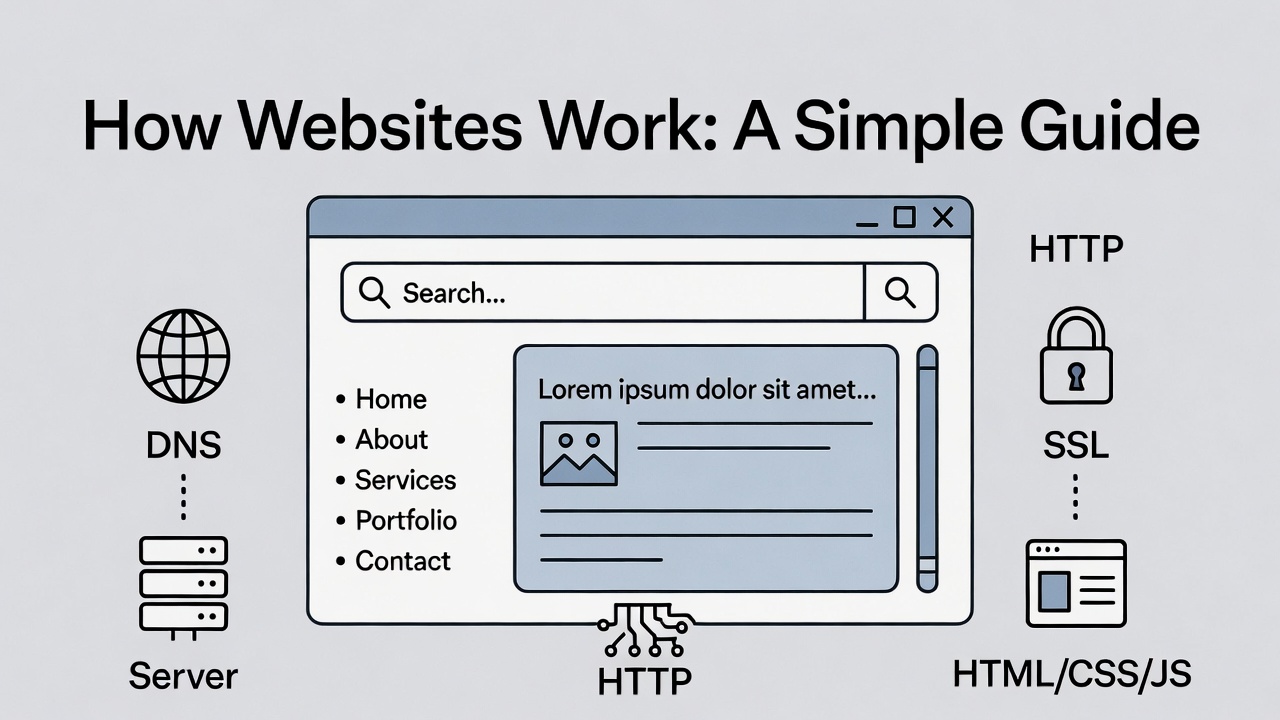
Discover how websites work behind the scenes. This simple guide explains the rol...
Leave a Comment