HTML Forms Explained for Beginners

HTML forms are one of the most important parts of modern websites. Whenever a user logs in, signs up, searches for something, or sends a message through a contact page, they are interacting with an HTML form.
In simple terms, an HTML form is a structure that allows websites to collect information from users. This information can then be sent to a server where it is processed, stored in a database, or used to perform specific actions.
For beginner developers, understanding how forms work is a fundamental step toward building interactive web applications. Without forms, websites would only display information and users would not be able to interact with them.
In this guide, you will learn the basic structure of HTML forms, how different input elements work, and how to create user-friendly forms that collect information effectively.
<form> ElementEvery HTML form begins with the form element. This tag acts as a container for all the input fields, buttons, and controls that make up the form.
The form element also defines how the data will be sent to the server.
Two important attributes are commonly used:
action – defines where the form data will be sent
method – defines how the data will be sent
The two most common methods are:
GET – data is appended to the URL
POST – data is sent securely in the request body
Example of a basic form structure:
<form action="/submit-form" method="POST">

</form>
This simple structure shows the starting point of every HTML form.
The label element is used to describe the purpose of an input field. Many beginners skip this step, but labels are extremely important for usability and accessibility.
A label helps users understand what information they need to provide. It also improves accessibility for people using screen readers.
To connect a label with an input field, we use the for attribute in the label and match it with the id attribute of the input element.
Example:
<label for="username">Username:</label>
<input type="text" id="username" name="username">
When the label is clicked, the cursor will automatically move to the input field. This small improvement makes forms easier to use.
<input> ElementThe input element is the most commonly used element in HTML forms. It allows users to enter different types of data.
The behavior of an input field is controlled by the type attribute.
Here are some common input types used in forms:
The text input allows users to enter short text information such as a name or username.
Code example:
<input type="text" name="fullname" placeholder="Enter your full name">The email input automatically checks whether the entered text looks like a valid email address.
<input type="email" name="email" placeholder="Enter your email">This helps reduce invalid form submissions.
Password inputs hide the characters that users type for security reasons.
<input type="password" name="password">This type of input is commonly used on login and registration pages.
Radio buttons allow users to choose only one option from a group.
Example:
<label>
<input type="radio" name="gender" value="male">
Male
</label>

<label>
<input type="radio" name="gender" value="female">
Female
</label>
Only one radio button can be selected at a time.
Checkboxes allow users to select multiple options.
Example:
<label>
<input type="checkbox" name="skills" value="html">
HTML
</label>

<label>
<input type="checkbox" name="skills" value="css">
CSS
</label>
Users can select one, both, or none.
<textarea> ElementSometimes users need to enter longer messages such as comments, feedback, or descriptions. In these situations, a simple input field is not enough.
The textarea element allows users to enter multiple lines of text.
Example:
<label for="message">Your Message</label>

<textarea id="message" name="message" rows="5"></textarea>
The rows attribute controls the visible height of the textarea.
This element is commonly used in:
contact forms
feedback forms
support forms
<select>When you want users to choose from a predefined list of options, a dropdown menu is a great solution.
This is created using the select element together with option elements.
Example:
<label for="country">Select your country</label>

<select id="country" name="country">

<option value="usa">United States</option>
<option value="uk">United Kingdom</option>
<option value="canada">Canada</option>

</select>
Dropdown menus help keep forms clean and organized.
A form needs a way for users to send their data to the server. This is done using a submit button.
Example:
<button type="submit">Submit Form</button>When the button is clicked, the browser sends all the form data to the URL specified in the action attribute.
HTML provides several attributes that improve the usability of forms.
The placeholder attribute displays a short hint inside an input field.
Example:
<input type="text" placeholder="Enter your username">The text disappears when the user starts typing.
The required attribute prevents users from submitting a form if the field is empty.
Example:
<input type="email" required>The browser will display a warning message if the field is not filled.
The pattern attribute allows developers to enforce specific formats.
Example:
<input type="text" pattern="[A-Za-z]+" placeholder="Only letters allowed">This ensures the user enters only valid data.
When designing forms, developers should focus on usability and simplicity.
Here are some best practices to follow.
Ask only for information that is necessary. Long forms discourage users and increase abandonment rates.
Always provide clear labels so users know exactly what information is required.
Use HTML elements like fieldset and legend to group related inputs.
Ensure input fields and buttons are large enough to be used comfortably on mobile devices.
Clear validation messages help users correct mistakes quickly.
HTML forms are essential tools for building interactive websites. They allow users to communicate with servers by submitting information such as names, emails, messages, and preferences.
By learning how to use the form element together with inputs, labels, textareas, and buttons, developers can create powerful interfaces that collect and process user data effectively.
For beginners, the best way to master HTML forms is through practice. Try building your own contact form or registration page using the examples in this guide. As you gain more experience, you can combine HTML forms with CSS and JavaScript to create fully functional web applications.
Understanding forms is a major milestone in web development, and it opens the door to creating dynamic, user-friendly websites.
 Mar 06, 2026
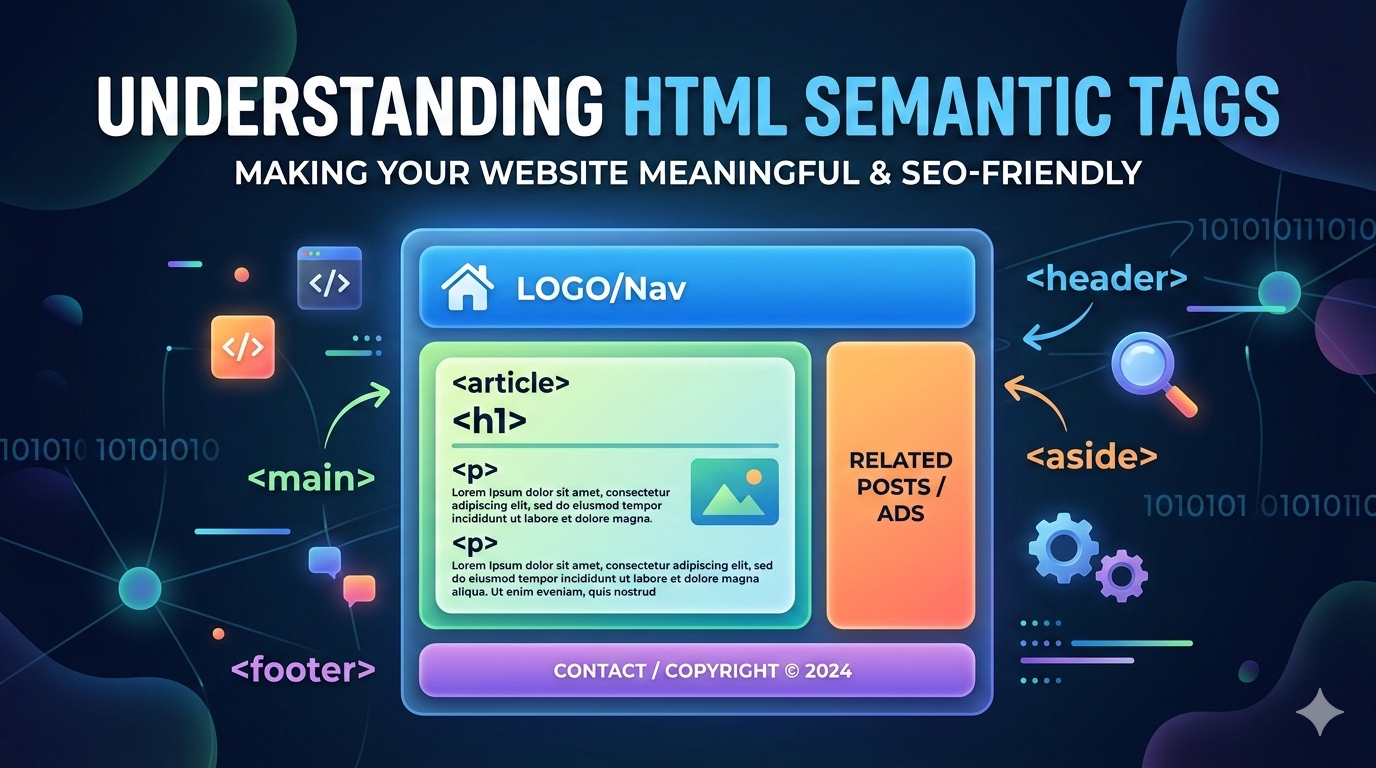
Learn what HTML semantic tags are and why they are important for modern web deve...

Leave a Comment